
Stonecrest Hedging Services
Choose Stonecrest for expert hedging that enhances privacy, boosts curb appeal, and ensures your property always looks its best—crafted with precision and care by our experienced team.
Get a Free QuoteOur Stonecrest Landscaping & Yard Care Services
When to Schedule Hedging in Stonecrest, Georgia – Seasonal Guide
In Stonecrest, Georgia, the best times to schedule hedging are typically late winter through early spring and again in late summer. These periods align with the city’s mild winters and hot, humid summers, allowing shrubs and hedges to recover quickly from trimming. Local neighborhoods like Chapel Lake and The Parks at Stonecrest often experience early spring growth spurts, making February to April ideal for shaping hedges before new leaves fully emerge. Late summer, after the peak heat but before autumn rains, is also suitable for a final tidy-up.
Stonecrest’s unique landscape features—including clay-heavy soils, variable shade from mature tree canopies, and the risk of late frosts—should guide your hedging schedule. Areas near Arabia Mountain or along Panola Road may have microclimates that affect plant growth rates. Be mindful of municipal guidelines and local environmental factors, such as drought advisories or water restrictions, which can be found on the city’s official website.
Local Factors to Consider for Hedging in Stonecrest
- Tree density and shade coverage in neighborhoods like Fairington
- Soil type (clay vs. loam) affecting root health
- Average precipitation and risk of summer drought
- Frost dates, especially in low-lying areas
- Municipal restrictions on landscaping or water use
- Terrain slope and drainage patterns
- Proximity to landmarks like Arabia Mountain influencing microclimates
Benefits of Hedging in Stonecrest
Enhanced Curb Appeal
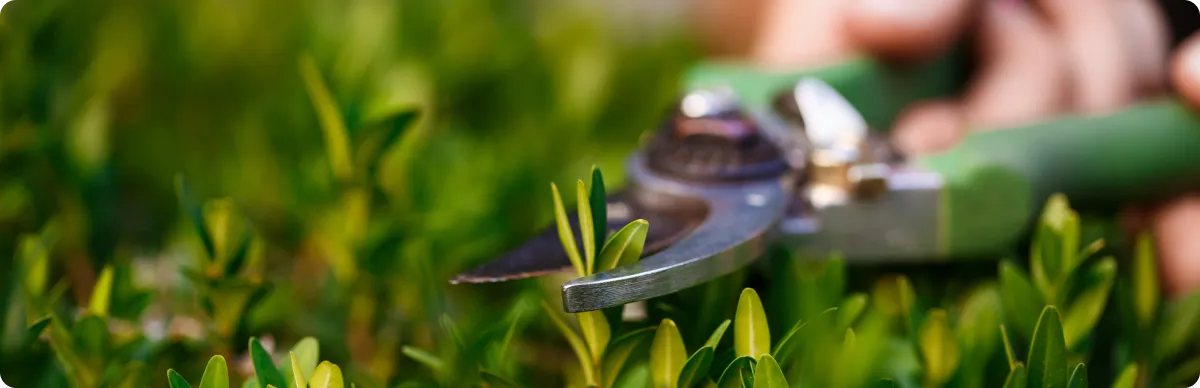
Professional Hedge Shaping
Improved Property Privacy
Expert Plant Health Management
Seasonal Maintenance Scheduling
Eco-Friendly Landscaping Solutions
Stonecrest Hedging Types

Boxwood Hedges
-
Privet Hedges
-
Yew Hedges
-
Laurel Hedges
-
Holly Hedges
-
Arborvitae Hedges
-
Photinia Hedges
Our Hedging Process
Consultation and Planning
Site Preparation
Precision Trimming
Cleanup and Inspection
Why Choose Stonecrest Landscape Services

-
Stonecrest Homeowners Trust Us
-
Expert Lawn Maintenance
-
Reliable Scheduling
-
Competitive Pricing
-
Professional Team
-
Satisfaction Guarantee
-
Personalized Service
Hedge Trimming Timing and Stonecrest's Piedmont Clay Soil Conditions
Stonecrest, Georgia, falls within USDA Hardiness Zone 7b, situated in the Metro Atlanta Piedmont region where Cecil and Madison soil series dominate — dense red clay soils with limited drainage and moderate to high compaction potential. These conditions directly affect hedge root systems and growth rates. Compacted clay restricts moisture infiltration, causing hedges to experience drought stress during Stonecrest's dry summer periods (typically July through August) even when surface rainfall appears adequate. According to the USDA Web Soil Survey, soils in this area are often acidic, with pH levels ranging from 5.0 to 6.0, which can affect nutrient uptake in commonly planted hedge species such as Leyland cypress, wax myrtle, and cherry laurel. Optimal trimming windows for warm-season growth in Stonecrest are:
- Late February to mid-March: Pre-growth shaping before spring flush
- Late June to early July: Mid-season maintenance trim
- September: Final shaping before dormancy
Avoid heavy pruning after mid-October to prevent cold-damage vulnerability in newly cut growth. Consult UGA Cooperative Extension for species-specific pruning depth guidance.
Stonecrest Code Enforcement Standards for Hedge Height and Property Frontage
Stonecrest's Code Enforcement Division actively monitors property maintenance standards, including hedge overgrowth that may obstruct sightlines, encroach on public rights-of-way, or violate frontage upkeep requirements. Hedges planted near intersections, driveways, or sidewalks are subject to visibility clearance standards to ensure pedestrian and vehicular safety. Property owners should be aware of the following compliance considerations:
- Hedges must not obstruct driver sightlines at intersections or driveway aprons
- Overgrowth encroaching onto public sidewalks or rights-of-way may trigger a code violation notice
- Uncontrolled hedge growth in residential zones can constitute a nuisance vegetation violation
- Frontage maintenance is the responsibility of the adjacent property owner, even where hedges border public easements
Verify current hedge height thresholds and frontage requirements directly with the Stonecrest Code Enforcement Division, as specific numerical limits may vary by zoning district.
Stonecrest Code Enforcement
3120 Stonecrest Pkwy, Stonecrest, GA 30038
Phone: (770) 224-0200
Official Website: Stonecrest Code Enforcement
Protecting South River Watershed Corridors During Hedge Maintenance in Stonecrest
Stonecrest lies within the South River watershed, a tributary system that drains into the Ocmulgee River basin. Several drainage corridors, detention ponds, and low-lying areas throughout the city are directly connected to this watershed. Hedge trimming and removal activities near these features can generate clipping debris and disturbed soil that, if unmanaged, may enter storm drains or drainage swales and contribute to water quality degradation. The Georgia EPD Watershed Protection Branch establishes water quality standards applicable to stormwater discharges in this region. Property owners and landscape professionals should follow these practices during hedge work near drainage features:
- Collect and bag all hedge clippings before they reach storm inlets or drainage channels
- Avoid trimming immediately before heavy rainfall events, which are common in Stonecrest from April through September
- Do not blow or rake clippings into roadside ditches, curb lines, or detention pond edges
- Maintain a minimum 25-foot working buffer from any identified stream bank or wetland edge
DeKalb County Watershed Management oversees stormwater infrastructure serving Stonecrest and can provide guidance on drainage-sensitive areas.
DeKalb County Watershed Management
1580 Roadhaven Dr, Stone Mountain, GA 30083
Phone: (404) 371-2673
Official Website: DeKalb County Watershed Management
Hedge Species Selection for Stonecrest's Wooded Lots and Shaded Corridors
Stonecrest contains a significant proportion of wooded residential lots, particularly in older subdivisions developed in the 1980s and 1990s where mature tree canopy creates dense shade conditions. Selecting appropriate hedge species for these environments is essential to long-term plant health and reduced maintenance burden. Many commonly planted hedge species — including Leyland cypress and photinia — perform poorly under heavy shade or in compacted clay soils with poor drainage. UGA Cooperative Extension recommends the following species as well-suited to Stonecrest's Piedmont conditions:
- Wax myrtle (Morella cerifera): Native, shade-tolerant, adaptable to clay and wet pockets
- Inkberry holly (Ilex glabra): Tolerates shade and periodic moisture fluctuation
- Virginia sweetspire (Itea virginica): Native, performs well in partial shade and acidic clay soils
- Nellie R. Stevens holly: Moderate shade tolerance, dense screening habit
- Skip laurel (Prunus laurocerasus 'Schipkaensis'): Performs better than cherry laurel in shadier conditions
Avoid invasive species such as Chinese privet (Ligustrum sinense), which is flagged by UGA Extension - Invasive Species as a significant ecological threat in Georgia's Piedmont region.
Stonecrest Arborist Division Coordination for Hedges Near Tree Canopy and Utility Lines
Hedges planted beneath or adjacent to overhead utility lines, mature tree canopies, or within utility easements require careful management to avoid conflicts with infrastructure and urban forestry resources. The Stonecrest Arborist Division provides urban forestry guidance and can advise property owners on hedge placement and trimming practices that protect the city's tree canopy. Key considerations for hedge work near trees and utilities include:
- Hedges growing into overhead utility corridors may require coordination with Georgia Power or the relevant utility provider before trimming
- Root competition between established trees and hedge plantings is common in Stonecrest's clay soils, where shallow root systems compete for limited moisture and nutrients
- Hedge removal near protected trees should be evaluated to avoid damaging surface roots
- Trimming equipment operating near utility lines must maintain safe clearance distances consistent with OSHA standards for proximity to energized conductors
Property owners planning significant hedge removal or installation near utility easements should also consult Stonecrest City Engineering to confirm easement boundaries and infrastructure locations before beginning work.
Stonecrest Arborist Division
3120 Stonecrest Pkwy, Stonecrest, GA 30038
Phone: (770) 224-0200
Official Website: Stonecrest Arborist Division
What Neighborhoods Do We Serve Throughout Stonecrest, GA?
Hedging services are provided across Stonecrest's diverse residential and mixed-use neighborhoods, each presenting distinct site conditions that influence species selection, trimming frequency, and compliance requirements.
- Stonecrest Marketplace Area: Transitional zone between commercial and residential uses with newer landscaping installations; hedges here often require more frequent shaping due to high visibility frontage standards.
- Flat Shoals Corridor Neighborhoods: Older subdivisions with mature tree canopy and compacted red clay soils; shade-tolerant hedge species are frequently necessary, and root competition from established trees is a common challenge.
- Panola Road Communities: Mixed-age residential lots with varying drainage conditions; some properties border low-lying areas connected to South River watershed tributaries, requiring debris management during trimming.
- Wesley Chapel Road Subdivisions: Established neighborhoods with dense HOA-maintained streetscapes; hedge height and uniformity standards are commonly enforced by community associations.
- Lithonia Industrial Boulevard Corridor: Properties near commercial transition zones where frontage hedge maintenance intersects with right-of-way visibility requirements monitored by Code Enforcement.
- Browns Mill Road Area: Wooded residential lots with significant slope variation and clay soil drainage limitations; hedge root systems in these areas may experience periodic saturation during heavy rainfall seasons.